Birth Doula vs Postpartum Doula: What’s The Difference?
If you’re considering a career as a doula, one of the biggest decisions you’ll make is choosing between becoming a Birth Doula or a Postpartum Doula.
While both roles focus on supporting growing families during one of the most important transitions in life, the day-to-day responsibilities, schedules, and client experiences can look very different.
Some doulas thrive in the fast-paced environment of labor and birth, while others prefer providing ongoing support to families during the postpartum period.
The good news? There isn’t a right or wrong choice. Both specialties offer meaningful work, rewarding relationships with families, and the opportunity to build a successful doula business.
In this guide, we’ll break down the key differences between birth doulas and postpartum doulas so you can decide which path best fits your personality, lifestyle, and long-term goals.
What Is A Birth Doula?
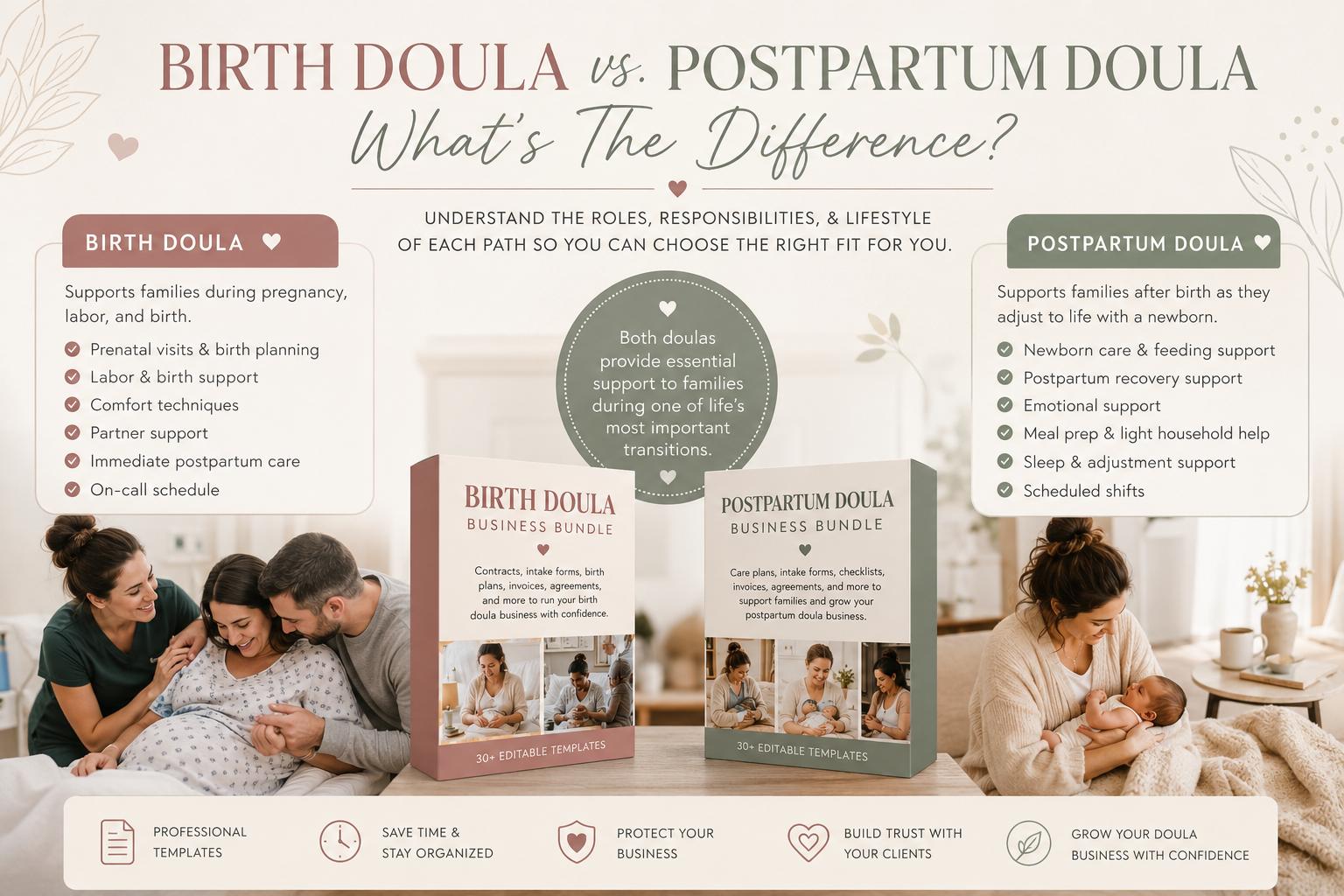
A Birth Doula provides emotional, physical, and informational support during pregnancy, labor, and birth.
Birth doulas work closely with families to help them prepare for labor, understand their options, and feel confident throughout the birth experience.
Typical birth doula responsibilities include:
- Prenatal visits
- Birth planning sessions
- Creating birth preferences
- Labor support
- Comfort measures during labor
- Emotional support for partners
- Evidence-based education
- Immediate postpartum support
Birth doulas are usually on-call, meaning they must be available when labor begins, whether that’s at 2 PM or 2 AM.
For many doulas, being present during one of the most life-changing moments for a family is one of the most rewarding aspects of the profession.
What Is A Postpartum Doula?
A Postpartum Doula supports families after the baby arrives.
Rather than attending births, postpartum doulas focus on helping parents adjust to life with a newborn while providing practical and emotional support during the recovery period.
Typical postpartum doula responsibilities include:
- Newborn care support
- Breastfeeding support
- Bottle feeding guidance
- Postpartum recovery education
- Emotional support
- Meal preparation
- Light household support
- Sleep guidance
- Resource referrals
- Family adjustment support
Unlike birth doulas, postpartum doulas usually work scheduled daytime or overnight shifts with predictable hours.
Many professionals appreciate the consistency and flexibility that postpartum work provides.
Birth Doula vs Postpartum Doula: The Biggest Differences
1. Timing Of Support
Birth doulas support families before and during birth.
Postpartum doulas support families after birth.
While both roles focus on supporting parents, the timing of that support is completely different.
2. Schedule And Availability
Birth doulas typically work on-call schedules.
This means:
- Keeping your phone nearby.
- Remaining available during clients’ due date windows.
- Potentially attending births overnight.
Postpartum doulas usually work scheduled shifts such as:
- Morning shifts
- Evening shifts
- Overnight newborn care
- Weekend support
If predictable hours are important to you, postpartum work may be a better fit.
3. Work Environment
Birth doulas commonly work in:
- Hospitals
- Birth centers
- Clients’ homes
Postpartum doulas primarily work in:
- Clients’ homes
- Overnight newborn care settings
- Family support environments
4. Type Of Support
Birth doulas focus on:
- Labor comfort techniques
- Birth education
- Advocacy
- Partner support
- Emotional reassurance during labor
Postpartum doulas focus on:
- Recovery support
- Feeding support
- Newborn care education
- Household assistance
- Emotional wellbeing
5. Client Relationships
Birth doulas often build relationships over several prenatal appointments and the birth itself.
Postpartum doulas may work with families over weeks or even months, creating long-term relationships and ongoing support.
Which Type Of Doula Has More Flexible Hours?
One of the biggest lifestyle differences between these careers is scheduling.
Birth doulas must remain available during clients’ due dates and often attend births at unpredictable times.
A labor may last four hours or twenty-four hours.
Postpartum doulas generally enjoy more structured schedules because visits are booked in advance.
If work-life balance and predictable hours are priorities for you, postpartum support may offer greater flexibility.
Which Type Of Doula Earns More?
Income varies depending on:
- Location
- Experience
- Certifications
- Services offered
- Market demand
Birth doulas usually charge per birth package.
Postpartum doulas often charge hourly rates.
Many experienced doulas eventually offer both services, allowing them to support families throughout pregnancy, birth, and postpartum while creating multiple income streams.
Should You Become A Birth Doula?
Birth work may be the perfect fit if you:
- Love the energy of labor and delivery.
- Enjoy fast-paced environments.
- Feel passionate about birth advocacy.
- Don’t mind being on call.
- Enjoy supporting families during intense moments.
Many birth doulas describe attending births as one of the most fulfilling experiences of their careers.
Should You Become A Postpartum Doula?
Postpartum work may be a better fit if you:
- Prefer consistent schedules.
- Love newborn care.
- Enjoy long-term client relationships.
- Want predictable working hours.
- Feel passionate about family recovery and adjustment.
Many postpartum doulas enjoy helping parents build confidence during the first weeks of parenthood.
Can You Be Both A Birth And Postpartum Doula?
Absolutely.
Many successful doulas provide both birth and postpartum services.
Offering both specialties allows you to:
- Support families throughout their journey.
- Increase referrals.
- Build stronger client relationships.
- Increase revenue opportunities.
- Create long-term client loyalty.
Many families who hire a birth doula later hire a postpartum doula as well.
The Business Side Of Being A Doula
Regardless of which specialty you choose, professionalism plays a major role in building trust and attracting referrals.
Families want to work with doulas who are organized, confident, and prepared.
Birth doulas often use:
- Contracts
- Intake forms
- Birth preference forms
- Service agreements
- Invoices
- Payment receipts
- Welcome packets
Postpartum doulas often rely on:
- Postpartum care plans
- Household support checklists
- Newborn care questionnaires
- Feeding logs
- Recovery forms
- Client welcome guides
Having these systems in place creates a smoother experience for both the doula and the client.
Resources For Birth Doulas
One challenge many new birth doulas face is creating professional client documents while also trying to grow their business.
From contracts and intake forms to invoices and welcome guides, building everything from scratch can quickly become overwhelming and time-consuming, especially when you’d rather focus on supporting families and booking clients.
Many established birth doulas choose to streamline their workflow with professionally designed onboarding systems that help them create a polished, consistent client experience from the very beginning.
Resources such as customizable contracts, client intake forms, service agreements, and welcome packets can help birth doulas save time, stay organized, and present their services with confidence.
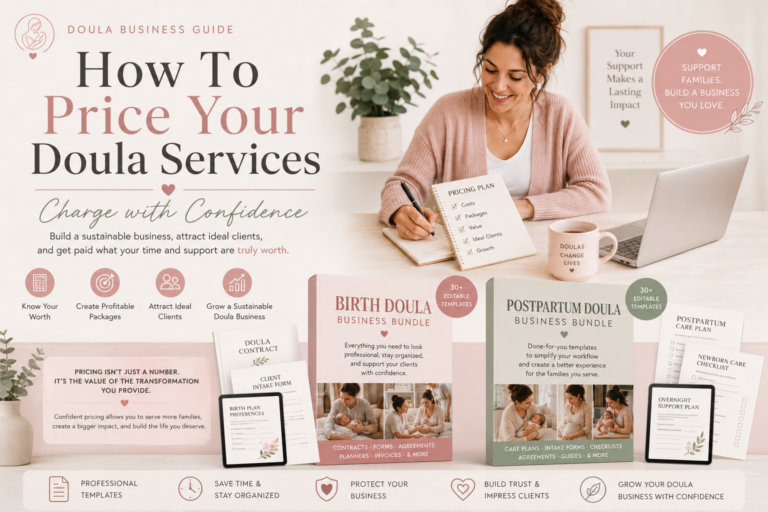
If you’d like to see an example of the types of documents many birth doulas use in their businesses, you can explore our Birth Doula Business Bundle here:
Resources For Postpartum Doulas
For many postpartum doulas, the weeks after birth are filled with shifting schedules, changing family needs, and constant communication with clients.
Having clear systems in place can make a significant difference, not only for staying organized, but also for creating a calm, supportive experience for the families you serve.
From postpartum care plans and newborn support questionnaires to household support checklists and client welcome materials, professional resources help postpartum doulas spend less time creating documents and more time focusing on what matters most: supporting parents during the transition into life with a newborn.
Many postpartum professionals choose to use ready-to-use systems and customizable client resources to simplify their workflow and deliver a more consistent client experience.
If you’re currently building your postpartum doula business, you can explore the types of resources many postpartum doulas use inside our Postpartum Doula Business Bundle.
👉 Postpartum Doula Business Bundle
Which Type Of Doula Is Right For You?
There is no universally better option between birth work and postpartum work.
The right choice depends on:
- Your personality
- Your preferred schedule
- Your lifestyle
- Your strengths
- The type of support you enjoy providing
Choose birth work if you love:
✔ Labor support
✔ Advocacy
✔ High-energy environments
✔ Being present for births
Choose postpartum work if you love:
✔ Newborn care
✔ Family education
✔ Predictable schedules
✔ Long-term relationships with families
And remember: you don’t necessarily have to choose only one.
Final Thoughts
Both birth doulas and postpartum doulas play an essential role in supporting families during one of the biggest transitions of their lives.
Birth doulas help families navigate pregnancy, labor, and delivery with confidence.
Postpartum doulas help families recover, adjust, and thrive during the early weeks with a newborn.
Whether you’re drawn to the birth room or the postpartum period, investing in professional systems, clear communication, and a strong client experience will help you build a successful and sustainable doula business.
Frequently Asked Questions
Is a birth doula the same as a postpartum doula?
No. Birth doulas provide support during pregnancy and labor, while postpartum doulas provide support after the baby is born.
Can a doula offer both birth and postpartum services?
Yes. Many doulas offer both services and support families throughout the entire journey.
Which type of doula has more flexible hours?
Postpartum doulas generally have more predictable schedules because visits are scheduled in advance.
Which type of doula earns more money?
Income varies depending on location, experience, and services offered. Both specialties can provide strong income opportunities.
Do I need contracts and intake forms as a doula?
Yes. Professional onboarding documents help create clear expectations and improve the client experience.